NEXPHORIA
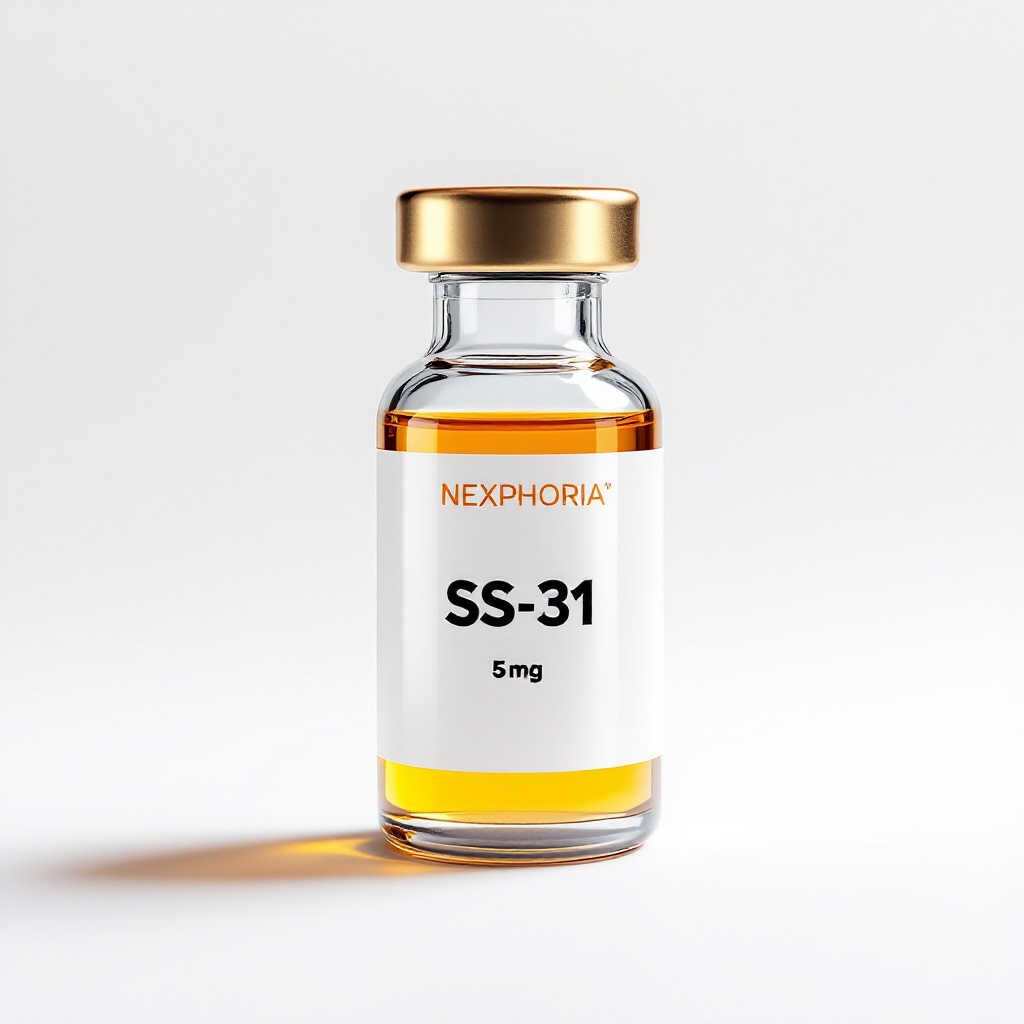
SS-31 (Elamipretide)
Mitochondria-targeting tetrapeptide. Cardiolipin interaction and energy restoration research.
Purchase Type
Fresh cold-chain delivery every 30 days
Format
For Research Use Only — Not For Human Consumption
This compound is sold exclusively for qualified research purposes. Not approved by the FDA for therapeutic use.
SS-31 (Elamipretide, MTP-131) is a synthetic aromatic-cationic tetrapeptide developed by Hazel Szeto at Cornell Medical. The alternating aromatic and cationic residue structure allows selective accumulation in the inner mitochondrial membrane (IMM) where it concentrates at cardiolipin-rich domains, reaching ~1000-fold higher concentrations than the cytoplasm.
Complete Your Protocol
Related compounds.
Side-by-Side Analysis
Compare SS-31 (Elamipretide) with Similar Compounds
View purity, MW, storage, and pricing side by side.
Frequently Bought Together
Complete Your Protocol
Researchers commonly order these compounds together. Convenient multi-compound ordering.
Anti-Aging
This itemSS-31 (Elamipretide)
10mg
$84
Anti-Aging
RecommendedMOTS-c
10mg
$144
Wellness
NAD+
100mg
$30
3 items selected
Uncheck any item to customize your bundle. Discount applied automatically at checkout.
Research Journal
Related Research Articles
Peptide Research for Nervous System Regeneration: BPC-157, SS-31, Semax, and Peripheral Neuropathy Protocols
A comprehensive research protocol guide covering BPC-157 axonal regeneration, SS-31 mitochondrial neuroprotection, and Semax BDNF/VEGF neurotrophic mechanisms for peripheral and central nervous system regeneration studies.
SS-31 for Aging Muscle: Mitochondrial Quality Control, Sarcopenia, and Elamipretide Research Protocols
A comprehensive research guide to using SS-31 (Elamipretide) to study sarcopenia and aging muscle biology — covering cardiolipin binding mechanism, Siegel 2013 quality-not-quantity data, aged C57BL/6J study design, satellite cell endpoints, and NAD+ combination protocols.
Peptide Bioavailability by Route of Administration: SC vs IP vs IN vs Oral — The Definitive Research Guide
A comprehensive reference covering subcutaneous, intraperitoneal, intranasal, intravenous, and oral peptide delivery routes — pharmacokinetics, bioavailability data, practical protocols, and study design implications for each compound class.